Happier, Healthier Indoor Cats Start Here
Practical, vet-reviewed guides on behavior, feeding, litter boxes and calming, plus honest buying guides for US cat owners who want to get it right.
- Reviewed by a registered veterinarian
- Sources linked in every guide
- No paid rankings

What do you need help with today?
Pick the closest match. Each hub links to our step-by-step guides.
Anxiety & calming
Stress, travel, vet visits 🍽️Food & feeding
What to feed and how much 🧺Litter box problems
Smell, avoidance, size, setup 🙀Behavior problems
Crying, fear, aggression 🧶Play & enrichment
Beat indoor boredom 🩺Health warning signs
Not eating or drinking 🐈Breeds & Maine Coons
Care for big, fluffy cats 🧮Free cat tools
Age, sleep and IQ calculatorsShopping for your cat? Start with these guides
We compare products on ingredients, evidence, safety and value, and we tell you when a cheaper option is the smarter buy.
Best calming treats for cats
Picks matched to travel, vet visits and daily stress.
Best human-grade cat food
What the label legally means and which brands qualify.
American-made cat food
Brands truly made in the USA, and ones that aren’t.
Best self-cleaning litter boxes
Which automatic boxes suit which cats and homes.
Best cat water fountains
Easy-to-clean fountains for cats who drink too little.
Best cat DNA tests
Breed and health kits compared honestly.
Best cat trees for large cats
Sturdy trees for Maine Coons and big climbers.
Best brushes for long-haired cats
Prevent mats without a fight.
Best dental chews for indoor cats
What helps teeth, and what’s just a treat.
Popular picks from our guides
Products our readers ask about most. Each one is explained in full, with alternatives, in the linked guide. Affiliate links may earn us a commission.
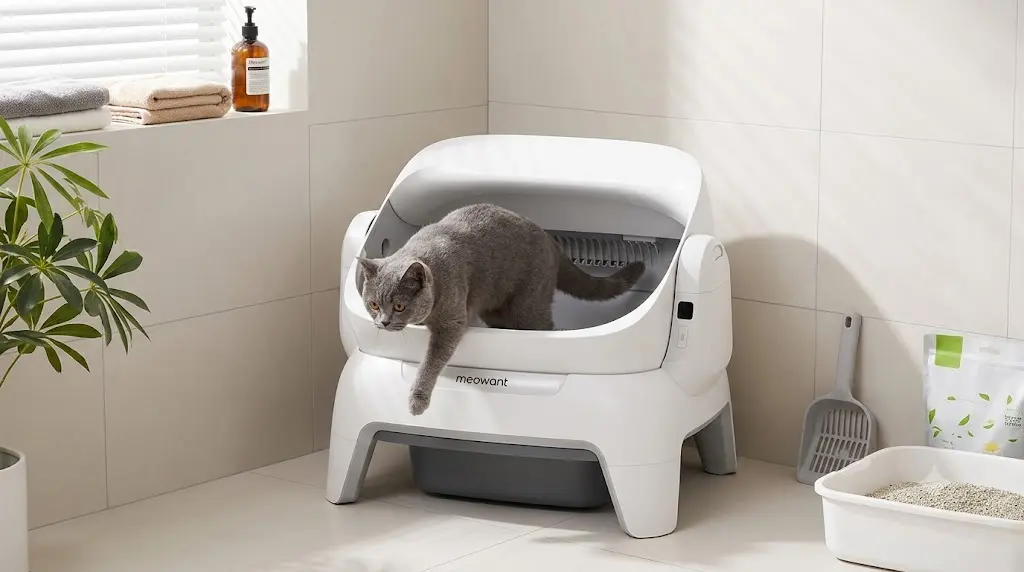
Meowant self-cleaning litter box
Rakes waste away after each visit, which helps owners who can’t scoop daily. Introduce it slowly to nervous cats.
Check price Compare all models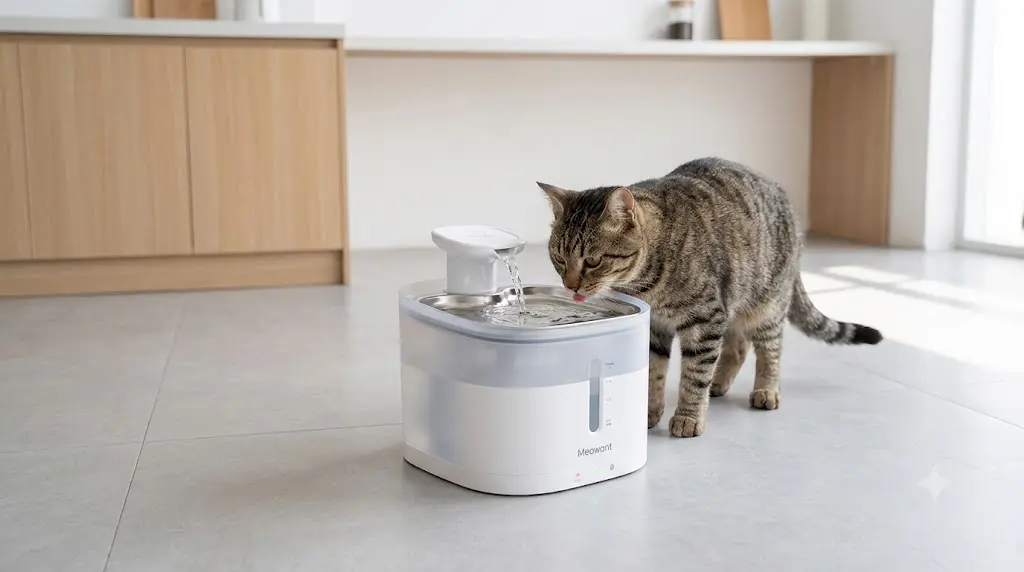
Meowant cat water fountain
Moving water tempts some low-drinking cats. Choose a model you can take apart and clean weekly.
Check price Compare fountains
Bailey’s CBD oil for cats
A drop-on-food option for cats who refuse chews. Cat research on CBD is limited, so ask your vet first.
Check price See all calming picksMeow Greens whole-food topper
A powder sprinkled on your cat’s current food. It’s a supplement, not a complete meal.
Check price Read the food guideIs your indoor cat happy, or hiding a problem?
Cats often hide pain and illness, so small changes matter. Here’s what to look for.
Signs of a happy, healthy cat
- Slow blinks and a relaxed face around you
- Tail held up when greeting you
- Grooms normally and keeps a tidy coat
- Eats and drinks normally for that cat
- Uses the litter box without straining or avoiding it
- Plays, explores and seeks your company
🚨 Go to an emergency vet now if your cat:
- Strains in the litter box with little or no urine, especially male cats
- Breathes with an open mouth or struggles to breathe
- Collapses, has a seizure or can’t stand
- May have eaten lilies, medicines or other toxins
- Hasn’t eaten for 24 hours or more
For suspected poisoning in the US, call the ASPCA Animal Poison Control Center at (888) 426-4435 (a fee may apply).
The 5 pillars of a healthy indoor cat home
Feline vets use five environmental needs from the AAFP/ISFM Environmental Needs Guidelines to prevent stress-related behavior and illness. Here’s how to apply each one at home.
A safe place
Hiding spots and high perches where your cat can retreat and feel in control.
Vertical space ideasSeparate key resources
Food, water, litter, scratching and sleeping spots apart, with one litter box per cat plus one.
Litter box placementPlay and hunting
Short daily play sessions that let your cat stalk, pounce and “catch”.
Enrichment ideasPredictable attention
Positive, consistent interaction on your cat’s terms, with a steady daily routine.
Helping fearful catsRespect for scent
Avoid strong cleaners and scented litter; let familiar smells stay. Some oils are toxic.
Is peppermint oil safe?Free weekly indoor cat health checklist
- Eating normally
- Drinking normally; fresh water daily
- Normal urine clumps, no straining
- Normal stool in the litter box
- Litter scooped at least once a day
- Daily play sessions done
- Coat brushed; no mats or bald spots
- Eyes, ears and teeth look normal
- No new hiding or mood changes
- Weight checked (monthly)
Print it and stick it on the fridge
A two-minute weekly check helps you spot changes early and gives your vet useful notes.
Free cat calculators

Reviewed by Dr. Muhammad Usama, DVM, RVMP
Happy Cat At Home is run by Dr. Usama, a veterinarian registered with the Pakistan Veterinary Medical Council (license no. 9472) with an MPhil in Zoology. He reviews every health guide against veterinary sources before it’s published.
- Sources linked in every health guide
- Product doses checked on current labels
- Brands can’t buy a better ranking
- AI-assisted drafts are always vet-reviewed
Common cat problems, solved step by step
Indoor cat care questions
How do I keep my indoor cat happy?
Keep an indoor cat happy by meeting five core needs: safe hiding and resting places, separate spots for food, water, litter and scratching, daily play that mimics hunting, a predictable routine with gentle attention, and a home that isn’t full of strong scents. These come from the AAFP/ISFM Environmental Needs Guidelines.
How much should I play with my indoor cat?
Most indoor cats do well with a few short play sessions a day, each ending with a “catch” and ideally a small meal or treat. Watch your cat: stopping before they lose interest keeps play exciting.
How many litter boxes does an indoor cat need?
A common rule is one litter box per cat plus one extra, placed in quiet spots on different levels or rooms. See our guides on litter box size and placement.
When is a cat not eating an emergency?
A cat that hasn’t eaten for 24 hours should see a vet. Cats, especially overweight ones, can develop fatty liver disease (hepatic lipidosis) when they stop eating. Read why cats stop eating.
Are your product recommendations independent?
Yes. We rank products on ingredients, evidence, safety and value. Some links are affiliate links, but brands can’t pay for a better position, and we often recommend products that earn us nothing.
Disclosure: Some links on this page are affiliate links marked as sponsored; we may earn a commission at no extra cost to you. See our affiliate disclosure. Content is educational and doesn’t replace your own veterinarian’s advice.